Understanding how trusted certifications support transparency, traceability, and more informed choices. We often say that building a more responsible fashion industry means looking at every part of the journey. One of the most visible parts, and often the one that sparks the most questions, is the material. What is this piece made from? Where did this fabric come from? How can I know that it was sourced the right way?
That is exactly where certifications come in. At NA KD we work with recognised and trusted third party certifications to confirm that the fibres we use follow strict criteria. This is one way we bring more clarity to the process, and support you in making informed decisions when you shop.
The path of a certified material
For a material to be considered certified it must follow a clear and documented journey through the entire value chain. That includes the raw material supplier, the spinner, the weaver or knitter, the dye house, the garment factory and finally, us as the brand. At each step a valid document called a transaction certificate (or TC) is required. This ensures that the certified fibre is properly tracked and has not been mixed or substituted along the way. It is not enough to start with a certified fibre. The certification must be maintained and verified at every step for the final product to carry the claim.The Principles of Chain of Custody
The aim of chain of custody is to preserve the identity of the claimed material and to track its movement through the supply chain up to the final product. This is done through Scope certificates and transaction certificates.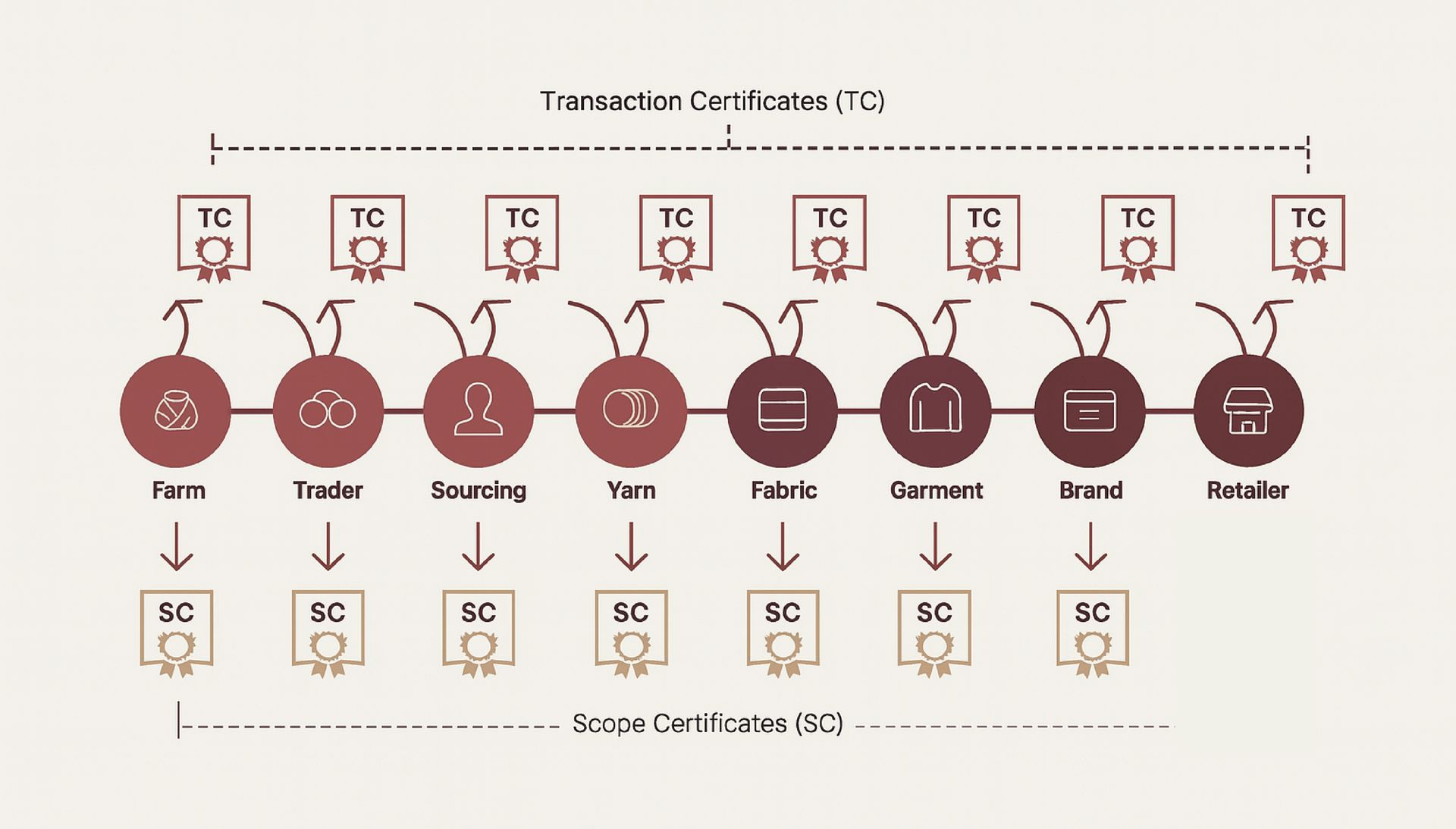
The certified materials we use
At NA KD we work with several certified fibres. These materials are used in accordance with their specific certification requirements and only when supported by valid documentation.- Organic cotton is certified through standards like OCS which confirm that the cotton comes from organic farms.
- Recycled fibres such as RCS and GRS certified materials which include clear requirements on content and for GRS also on processing.
- RWS wool ensures that the wool comes from farms that uphold animal welfare and responsible land management practices.
Communicating certifications clearly
We know that labels and claims can sometimes be confusing. That is why we only communicate material certifications when the product contains at least 50 percent certified fibre and when we have complete documentation to support the claim.For example, if a product tag says GRS, RCS, RWS or OCS, it means the certification applies to that product and that the claim has been verified at every stage of production. We do not add hangtags or make certification claims unless all conditions are fully met. That includes both the fibre content and the required documentation.
